
RECAP: PEC Championship
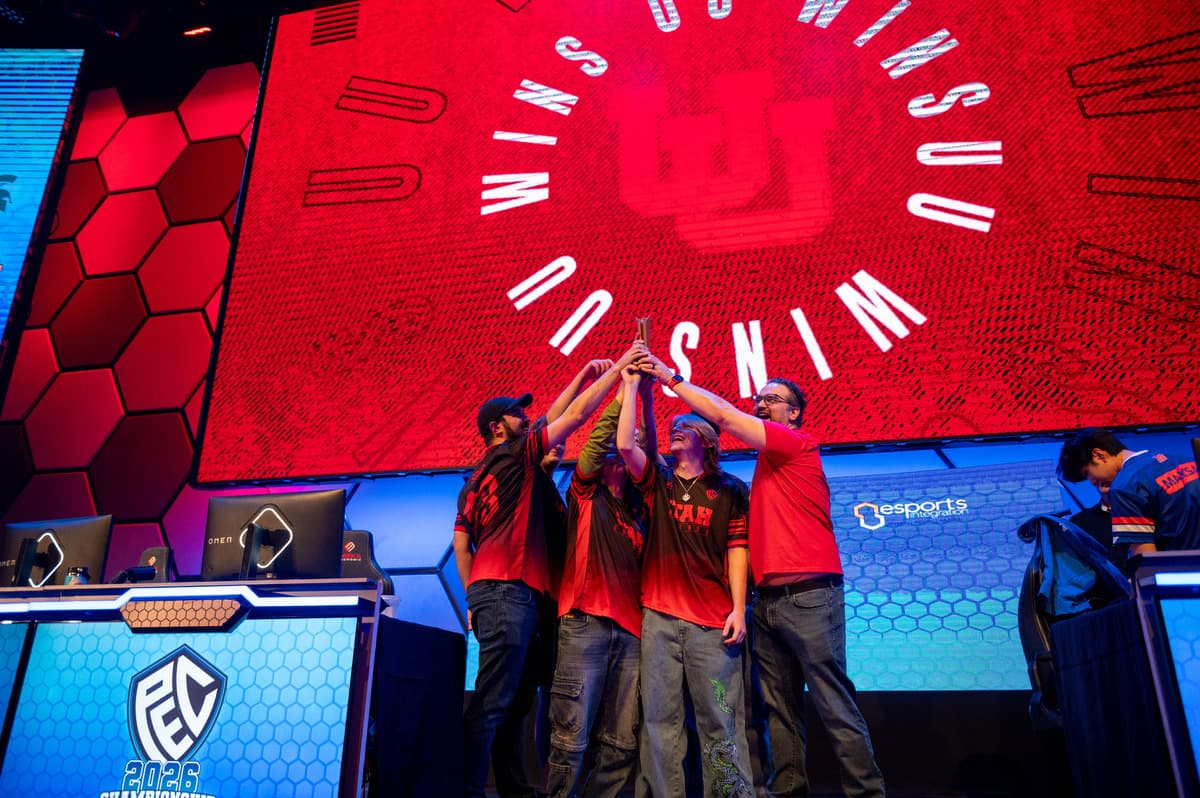
The HyperX Arena in Las Vegas set the stage earlier this month for the PEC National Championships, as the conference’s top programs converged to compete for titles across Super Smash Bros. Ultimate, Rocket League, Overwatch 2, and Valorant.
Across two days of high-level competition, the event delivered on every front. Established contenders met rising programs, series swung on single moments, and four champions ultimately emerged from a field that continues to grow stronger and more balanced each season. The result was a championship weekend that not only crowned winners, but reinforced the PEC’s position as one of the most competitive ecosystems in collegiate esports.
Super Smash Bros. Ultimate opened the slate of championship matchups with a decisive performance from Michigan State, who swept Minnesota 2-0 in the grand finals. Michigan State maintained control throughout both sets, dictating tempo and consistently winning key neutral exchanges. Their ability to limit Minnesota’s openings and capitalize on small advantages proved to be the difference.
At the center of that effort was MVP Dice, whose precision and composure anchored Michigan State’s run. Whether extending combos or closing out stocks in high-pressure situations, Dice set the tone early and never allowed momentum to shift. The result was a clean, confident championship performance that capped off one of the most consistent runs of the postseason.
In Rocket League, Baylor delivered a statement win, defeating Boise State 4-1 to claim the national title. From the opening kickoff, Baylor established control with structured rotations, efficient boost management, and relentless offensive pressure. Their ability to sustain attacks and quickly transition back to defense prevented Boise State from ever finding a consistent rhythm.
Baylor’s offensive execution was led by MVP Andy, who played a critical role in both creating and finishing scoring opportunities. Timely positioning and strong mechanical play allowed Baylor to convert pressure into goals, while their defensive discipline ensured that any Boise State counterattacks were quickly neutralized. Despite Boise State’s resilience throughout the tournament, Baylor’s cohesion and pace ultimately proved too much in the finals.
The Overwatch 2 championship provided one of the most dramatic moments of the weekend, as Utah edged out Boise State in a tightly contested 4-3 series. The match featured constant momentum swings, with both teams adapting throughout the series and trading map wins in a back-and-forth battle that came down to a final deciding map.
Utah’s ability to execute in key moments ultimately made the difference, and MVP NoSam played a central role in that effort. Consistent impact in critical fights, strong positioning, and the ability to stabilize engagements under pressure allowed Utah to maintain composure when the series reached its most decisive moments. The final map showcased the narrow margins that defined the matchup, with Utah capitalizing on late opportunities to secure the championship.
In Valorant, Boise State closed out the weekend with a dominant performance, sweeping Ohio State 3-0 to claim the national title. From the outset, Boise State controlled the pace of the series, combining disciplined structure with confident individual play to take command of each map.
MVP Kos led the charge with a standout performance that highlighted both consistency and playmaking ability. Across the series, Boise State executed with precision, maintaining control in both attacking and defensive situations while limiting Ohio State’s opportunities to gain momentum. The sweep reflected not only Boise State’s preparation, but their ability to perform at a championship level when it mattered most.
Beyond the individual results, the PEC National Championships underscored a broader theme: parity across the conference continues to rise. With four different programs claiming titles and multiple series defined by narrow margins, the event highlighted the depth of competition throughout the league. No single program dominated the weekend, and every championship required execution at the highest level.
That balance is a defining characteristic of the PEC’s current trajectory. Programs across the conference are investing, developing talent, and building systems capable of competing on a national stage. The result is a competitive environment where outcomes are increasingly determined by preparation, adaptability, and performance in key moments rather than reputation alone.
The setting further amplified the significance of the event. Competing on a stage like the HyperX Arena provided a championship environment that matched the level of play, reinforcing the professionalism and growth of collegiate esports. For players and programs alike, the opportunity to compete under those conditions reflects the continued evolution of the conference and its commitment to high-level competition.
As the PEC continues to expand, the 2026 National Championships serve as a clear marker of progress. The level of play, the balance of results, and the emergence of new champions all point toward a conference that is not only growing, but maturing into a nationally relevant competitive force.
With momentum building across its member programs and championship-caliber performances becoming the expectation, the PEC is entering its next phase defined by depth, opportunity, and the pursuit of titles on the biggest stages available.